The Forerunner 170 is Garmin’s new running-focused smartwatch that blends fitness tracking, health monitoring and everyday smart features into a lightweight and stylish package. While it is clearly aimed at runners, it also includes enough broader functionality to appeal to anyone who wants a capable smartwatch for daily wear.
Essentially, this watch is designed for people who want more than the basics, but without stepping into the territory of Garmin’s most advanced and expensive running watches.
Size, look and fit
The Forerunner 170 has a 1.2-inch AMOLED touchscreen display, which gives the watch a bright, colourful and modern appearance. The screen is sharp and easy to read, whether you are checking the time indoors, reviewing health statistics or glancing at your pace during a run.
In terms of styling, the watch has a distinctly sporty look and not too dissimilar to Garmin’s new Venu 4, but with an extra few buttons to help navigate the menu system. The watch does not look oversized or bulky, which is important when intended to be worn not only for training but also throughout the day and while sleeping. It does come only in one size, 43mm, which is slightly larger than the Venu 4’s smaller 41mm version and if you have small wrists, it is noticeable and may feel a little large. However, it is distinctively lighter at 41 grams in comparison to 46 grams. White and black versions are available.
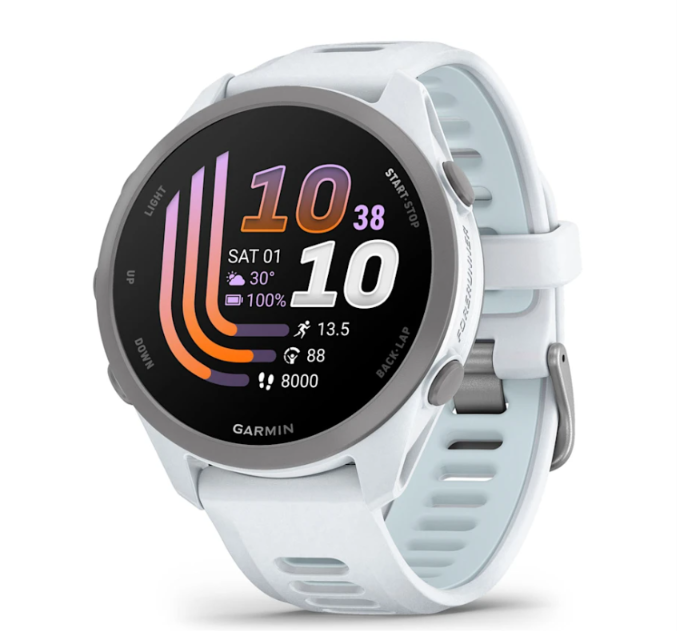
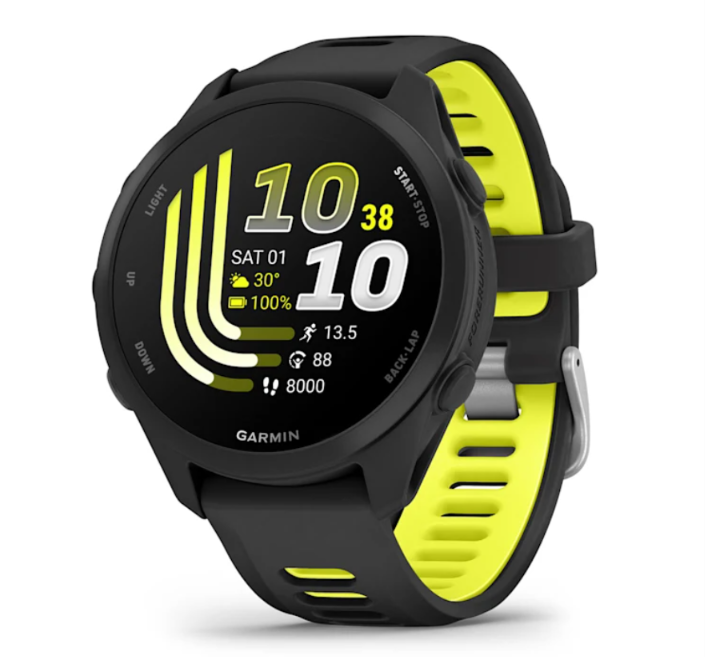
The design is simple and practical, with a touchscreen supported by five buttons that make it easier to navigate when exercising, one button is used to start and stop your activity, one is a lap counter, ideal if doing interval training. The remaining three buttons activate a light and control the menu system. This combination works well because touchscreens are convenient in daily use, while buttons can be easier to rely on when moving or working out.
The watch is designed with runners in mind; comfort is clearly a priority. It has the kind of lightweight feel that makes it suitable for long runs and all-day wear alike.
Overall, from an aesthetic point of view, the Forerunner 170 looks very similar to Garmin’s high-end watches and doesn’t look out of place when used as your daily watch.
Features
This product includes a broad range of features, but the most useful are those that support training, day-to-day convenience and health monitoring and has Bluetooth® and ANT+® connectivity.
1. Watch
At its most basic level, the Forerunner 170 handles the fundamentals well, clearly displaying the time, date and key daily information. The watch’s default display was a mixture of white and purple, but this is customizable to your taste via one of the menus.
Importantly, it also includes Garmin’s built-in Global Navigation Satellite Systems (GNSS) with support for multiple satellite systems, which helps runners and other outdoor users track where they are going and record important workout data such as distance and pace. For a watch built around running, this is one of the most important features, because accurate route and distance tracking is essential.
Like any good smartwatch, it also includes practical everyday functions like an alarm, but what gives it extra appeal is the way it blends these basics into a more fitness-driven platform.
2. Heart rate monitor
The watch includes wrist-based heart rate monitoring, allowing users to keep track of heart rate both during exercise and throughout the day. This is one of the most useful features because it removes the need for a chest strap for many users while still delivering meaningful training data.
This is particularly useful for running as it means you don’t need to purchase a heart rate monitor chest strap like in the early days of the Garmin Forerunner watches.
3. Smart features
The Forerunner 170 includes a useful range of smart functions that make it practical beyond exercise.
When paired with a smartphone, the watch can display emails, texts and alerts directly on your wrist.
The watch also supports Garmin Pay contactless payments, which means you can pay from your wrist when out and about. That gives it some of the convenience people have come to expect from more general-purpose smartwatches, while still keeping its identity firmly rooted in sport.
4. Training and coaching tools
This is where the Forerunner 170 starts to show its strength.
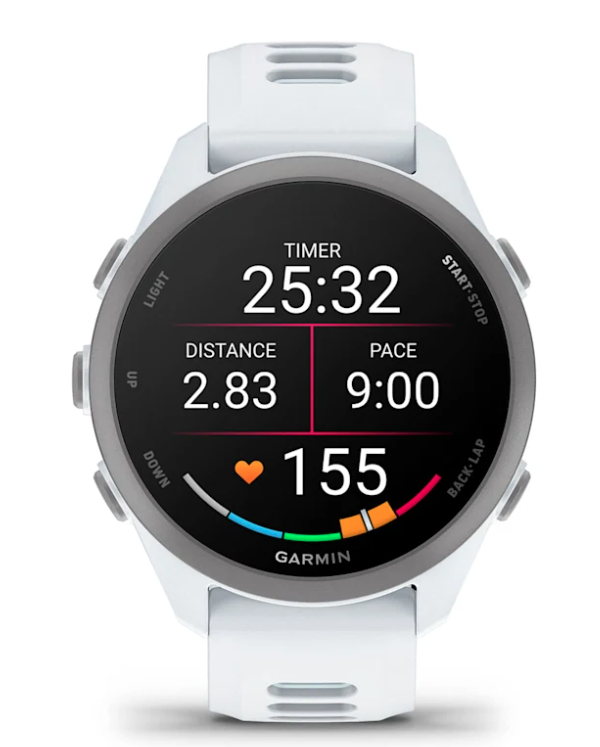
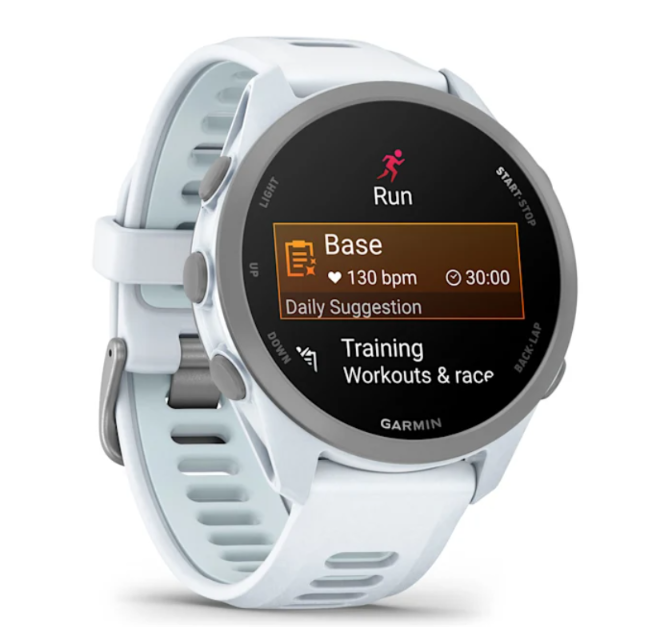
As a running watch, it does everything you need. It is simple to get into the running app by clicking the Start/Stop button and the first option is “Run.” The default screen has three data points which are time, distance, pace. These essentials enable you to start using the watch right out of the box. As you get familiar with navigating the menus, you can add extra data points and change the layout to best suit your needs.
If running is not your sport, there is an extensive range of other sporting activities to select from and is divided into sections. In the “Cycling” section, there is the choice of all different forms, from indoor cycling to mountain biking. Within the “Outdoor” section there are activities like hiking, mountaineering and even archery. Each activity comes with a set of default data points, with mountaineering tracking your elevation, including your ascent and descent.
In addition to the wide range of sporting activities the watch can support, it offers advanced training features such as training readiness, training status and training effect, giving users more insight into whether they are ready to train, whether their training is productive and what each workout is doing for their fitness. As the instruction manual notes:
Your training readiness is a score and a short message that helps you determine how ready you are for training each day. The score is continuously calculated and updated throughout the day using these factors:
- Sleep score (last night)
- Recovery time
- HRV status (Heart Rate Variability)
- Acute load
- Sleep history (last 3 nights)
- Stress history (last 3 days)
There is also a quick workout feature which allows users to create running workouts directly on the watch based on a desired time and intensity level. This is a useful feature for those who want structure without needing to plan everything in advance.
Health & Wellness
At the heart of the Forerunner 170 is a wide selection of health and wellness tools.
One of the most recognisable is Body Battery energy monitoring, which helps track your energy levels throughout the day and can be useful for working out when to train and when to rest. This is especially valuable for people who are trying to balance exercise with a busy lifestyle, because it gives a more rounded sense of how the body is coping.
The watch also includes HRV status, which helps users gain a deeper understanding of health, recovery and training by monitoring heart rate variability during sleep. This is one of the more advanced features on the watch and helps move it beyond simple activity tracking.
Regarding sleep tracking, while you sleep, the watch automatically tracks your rest by monitoring your movement and other key metrics during your normal sleep hours. You can customize your usual sleep schedule either in the Garmin Connect app or directly on the watch through Focus Modes.
Each morning, you’ll receive detailed sleep insights, including total sleep duration, sleep stages, movement during the night, and an overall sleep score. The integrated Sleep Coach also provides personalized recommendations for how much sleep you need, taking into account your recent sleep and activity history, circadian rhythm, HRV status, and any naps you’ve taken. Daytime naps are automatically detected, added to your sleep statistics, and factored into your overall recovery metrics.
The watch also supports women’s health tracking, including menstrual cycle and pregnancy tracking, helping make it a more inclusive wellness device, but this is done using Garmin Connect™ and the optional Connect IQ™ widget.
Overall, the health side of the Forerunner 170 is not just an afterthought. Garmin has clearly made an effort to ensure that this watch is useful both during training and during recovery.
Sports performance
The Forerunner 170 is clearly designed for runners, and that focus comes through strongly in the way the watch is positioned. Garmin describes it as a purpose-built GPS running smartwatch, and that feels accurate.
The essentials are all here: pace, distance and wrist-based heart rate, supported by GPS and structured workout guidance. For a runner, these are the fundamentals that matter most. The watch appears to be aimed particularly well at people who want clear, useful data without needing to jump straight into elite-level complexity.
If I were a new runner, this watch would appeal because it does more than the basics without being overly complicated.
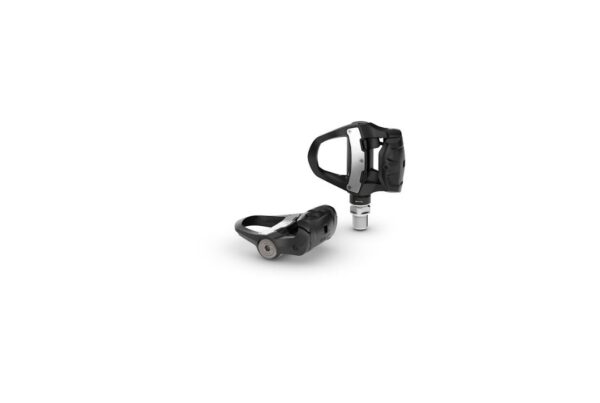
As mentioned, although primarily a running watch, it does have broader functionality and, for cyclists, the device is compatible with Garmin’s latest pedals like the Garmin Rally RK210 Dual-sided Power Meter.
Battery life
Battery life is another area where the Forerunner 170 performs well. Garmin states that it offers up to 10 days in smartwatch mode and up to 20 hours in GPS mode.
That means you can wear it continuously for health tracking, daily use and several training sessions without feeling like it constantly needs to be charged. For runners in particular, that matters because a watch loses a lot of its convenience if it has to be plugged in too frequently.
The key takeaway is that this is a watch designed to be worn regularly and relied upon consistently, rather than treated as a device that needs constant battery management.
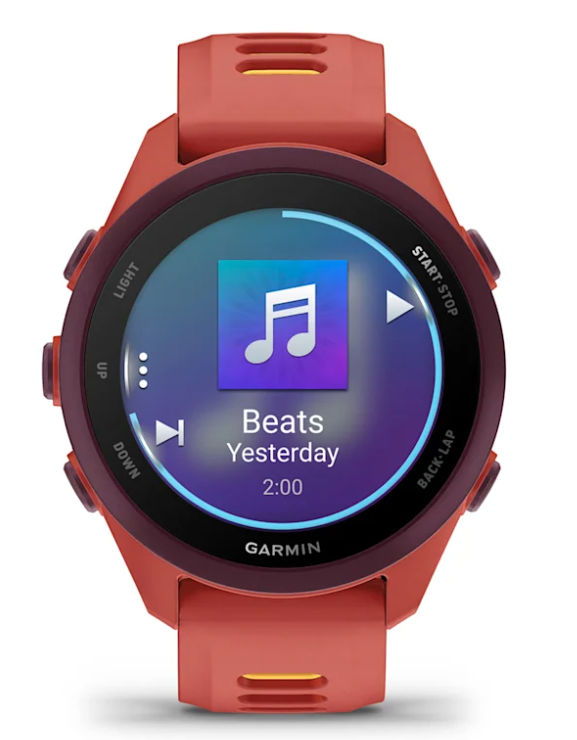
Garmin Forerunner 170 Music model
The Garmin Forerunner 170 has an alternative model, called the Forerunner 170 Music. This combines all the fitness and training features of the standard model with built-in music storage. This allows you to download playlists and listen phone-free when paired with Bluetooth headphones. This additional feature comes at an additional cost and several extra colours, red and green.
Price
The Forerunner 170 is priced at £259.00 / $299.00 USD / $419.99 CAD. The Forerunner 170 Music is more expensive. £299.99 / $349.99 / $489.99.
The cost of the watch places it in the market where people are willing to pay more than a basic tracker but may not want to spend the kind of money required for Garmin’s premium endurance-focused watches.
What you get for your money is:
- Forerunner 170 GPS running watch
- Charging cable
- Simple setup documentation
Summing up
The Garmin Forerunner 170 stands out as a focused and capable running smartwatch that successfully combines essential training features with smart everyday convenience. Its AMOLED display gives it a modern feel, while features such as GNSS tracking, wrist-based heart rate monitoring, Body Battery, HRV status and downloadable music make it far more than a basic running watch.
What Garmin seems to have done well here is make a device that feels accessible without feeling limited. It should appeal to newer runners who want guidance, as well as more regular runners who want reliable training data in a lightweight and attractive watch. Taken as a whole, the Forerunner 170 looks like a strong addition to Garmin’s running range.
If you have one of Garmin’s early basic smartwatches and are thinking of upgrading, this would be a noticeable step up without breaking the bank.