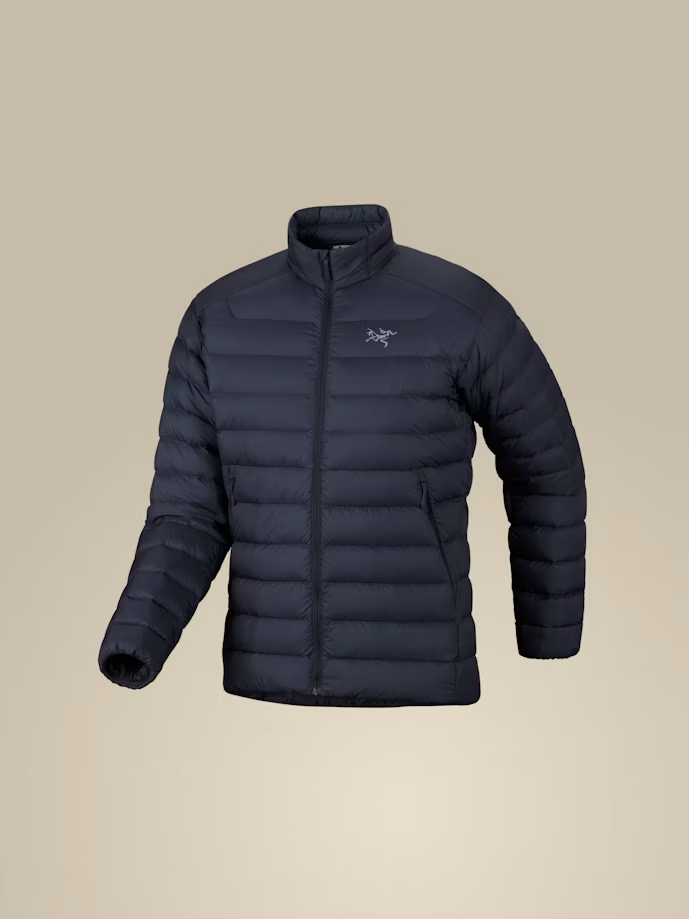
The Cerium is primarily a lightweight insulation layer rather than a rugged, all-purpose mountain jacket. It combines responsibly sourced 850-fill down with Coreloft™ synthetic insulation in areas more prone to moisture.
Formerly known as the Cerium LT, the jacket weighs 300 grams in a men’s medium.
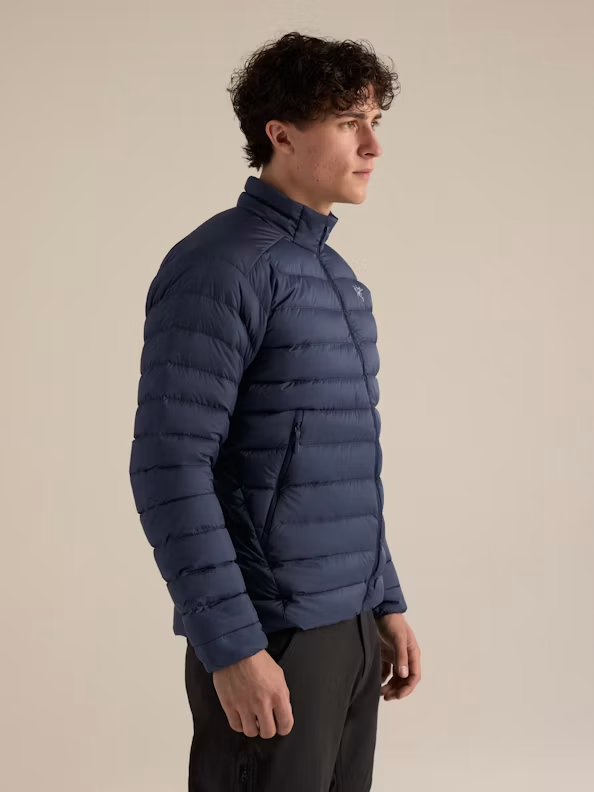
It is available in a range of colours, including Black, Black Sapphire (navy blue), Larch (dark yellow), and Habitat II (off-grey). It is priced at £340, US$380, and CAD$480.
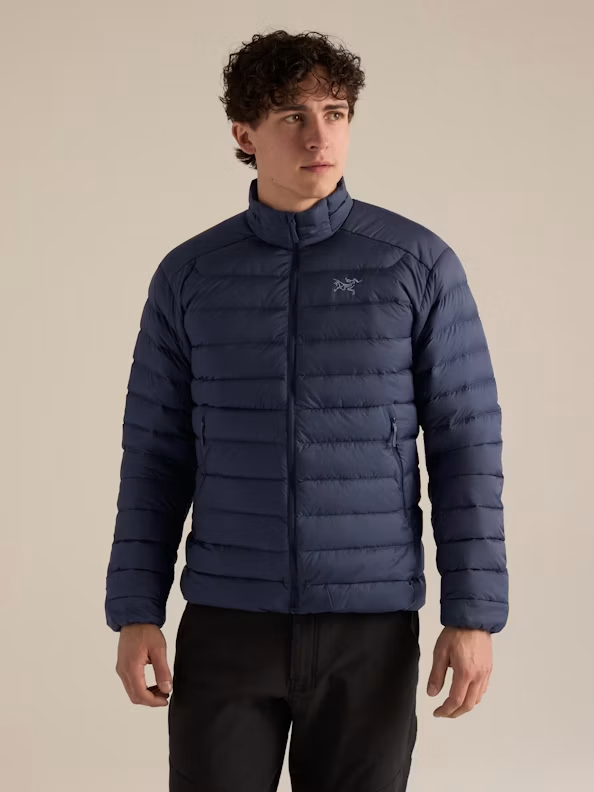
What is the Cerium designed for?
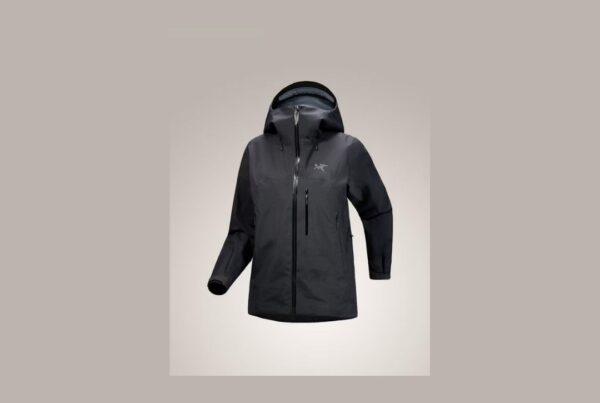
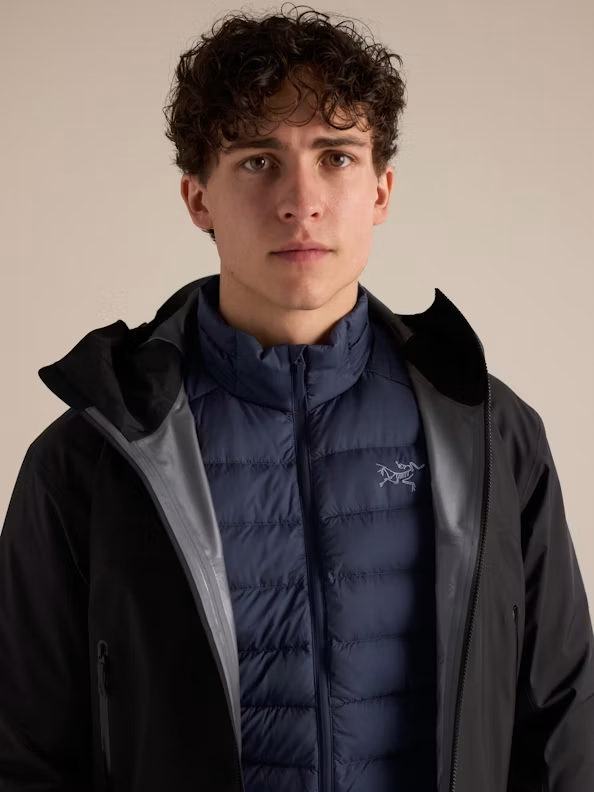
The Cerium is ideally suited for use as a midlayer and can easily be worn underneath a hardshell such as the Arc’teryx Alpha SV. However, it works equally well as a standalone jacket on cold, dry days, making it a versatile addition to any outdoor wardrobe.
Like many of Arc’teryx’s jackets, it has a clean, understated design and wouldn’t look out of place on a cold day in the city. The Arc’teryx name printed on the back is also a nice touch.
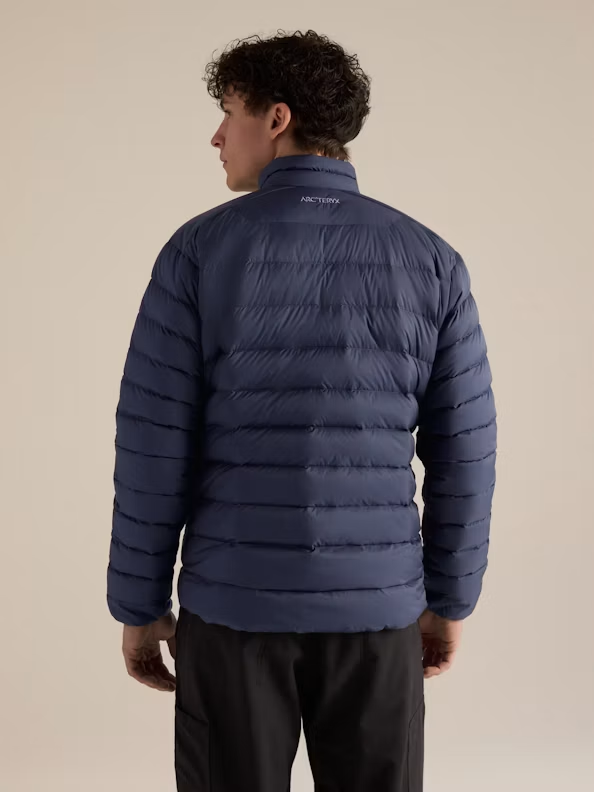
Warmth and insulation
The Cerium’s biggest strength is its warmth-to-weight ratio. Its low weight and packability make it
an excellent jacket to put into your pack and complement being worn under a hardshell. The Cerium provides the warmth, while the outer layer provides protection against the elements.
It can also be worn on its own on cold, dry days, with the collar zipping up to the neck to provide additional insulation.
Ultimately, this is a warm jacket that provides a surprising amount of insulation without feeling bulky.
Weather Resistance
Despite having what Arc’teryx describes as an FC0-DWR (Durable Water Repellent) finish, the Cerium offers some protection against light moisture. The treatment helps water bead on the surface of the fabric rather than immediately soaking in, which is useful in light rain, drizzle, or when encountering wet snow. However, it is important not to confuse a DWR finish with waterproofing. The Cerium is still a lightweight down jacket, and prolonged or heavy rain will eventually overwhelm the outer fabric and can compromise the performance of the down insulation.
For this reason, I would be comfortable wearing the Cerium on its own in dry conditions or during a short spell of light precipitation, but I would not rely on it as my only layer in a heavy downpour. In wetter conditions, particularly in the mountains, it makes more sense to wear it underneath a waterproof hardshell.
Durability
The Cerium isn’t fragile, but its design prioritizes low weight and packability over outright toughness. The takeaway is simple: you need to be mindful of where and how you use it.
Arc’teryx notes that the jacket is made from 15D Arato™ and is light and durable. The 15D fabric keeps the jacket exceptionally light, but it isn’t something I’d choose for bushwhacking or scrambling.
Breathability
The Cerium’s priority is insulation rather than maximum breathability. Its tightly woven Arato nylon shell does an excellent job of blocking wind and trapping warmth, while the 850-fill goose down provides substantial insulation without adding much weight. The trade-off is that during high-output activities, such as hiking, the jacket can feel warm and less breathable as heat builds up inside.
Key Features
Zippers – The latest Cerium has a noticeably smaller front zipper than the heavier-duty zippers used on Arc’teryx’s hardshells. The rubberized zipper pull is easy enough to operate while wearing gloves, although I found the larger zipper used on some of Arc’teryx’s other jackets easier to manipulate. The trade-off is aesthetic: the smaller zipper looks considerably more refined when the Cerium is worn as a standalone jacket.
Pockets – There are three pockets: two external and one internal. The two external pockets are generously sized and easily accommodate gloves, a hat, or other small essentials.
The internal pocket is suitable for a phone, wallet, or other valuables, although I’d avoid storing sharp objects such as keys in it because of the relatively thin fabric.
The jacket also packs into its own stuff sack, which is stored in the internal pocket, making it easy to compress and carry in a backpack.
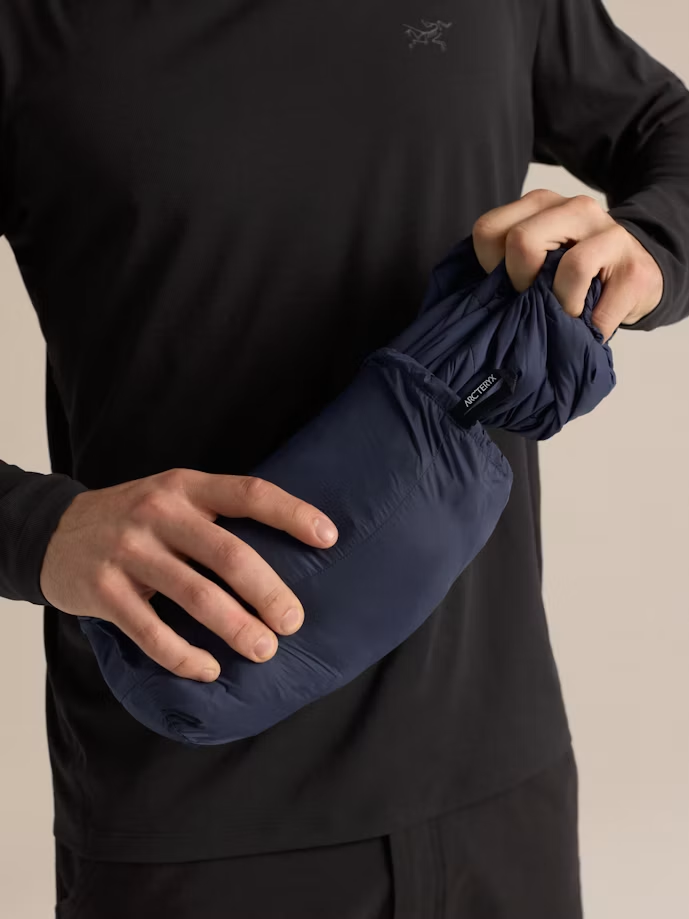
Cuffs– There are elasticated cuffs that keep the coat snug to your wrists, helping to reduce heat loss and prevent cold air from getting in.
Fit and Feel
The Cerium has a relatively close fit. Put it on, and the first impression is one of comfort: the 850-fill down lofts quickly around the torso without creating the bulk associated with heavier down jackets.
There is enough room to wear a fleece or other lightweight layer underneath, although the close cut makes it better suited to layering with thinner garments rather than wearing over several bulky layers. Those who prefer a more relaxed fit, or who fall between sizes, may find the jacket somewhat restrictive.
The elasticated cuffs help reduce heat loss around the wrists, while the adjustable hem allows the fit to be fine-tuned and helps keep cold air out. The front zip extends to the top of the collar, providing a snug fit around the neck when fully zipped and adding useful protection in colder conditions.
Despite its warmth, the Cerium remains comfortable to move around in and works well for activities such as walking and hiking, provided the conditions and level of exertion are appropriate. Its main appeal is the balance between warmth and low weight, although the close fit and high level of insulation mean it is not necessarily the best choice for everyone or for high-output activities where breathability and a looser fit are more important.
Pros & Cons
Pros
- Exceptional warmth-to-weight ratio
- Very packable
- Excellent midlayer
- Comfortable and stylish enough for everyday use
- High-quality 850-fill down
- Good pocket design
Cons
- Lightweight shell requires care
- Not suited to heavy rain
- Can become too warm during high-output activity
- Close fit may not suit everyone
- Premium price
Final Verdict
The Arc’teryx Cerium gets the fundamentals right. It is exceptionally light, packs down easily, and provides an impressive amount of warmth without the bulk associated with heavier down jackets. Its greatest strength is its versatility: it can live in your backpack as an insulating layer, work underneath a hardshell in the mountains, or be worn on its own on a cold, dry day.
There are compromises. The 15D outer fabric means you need to take more care around rock and vegetation, while the high level of insulation can make it uncomfortable during sustained, high-output activity. It is also not a substitute for a waterproof shell when the weather turns wet.
But those limitations are largely a consequence of what the Cerium is designed to do. This isn’t a jacket intended to be bombproof; it is designed to provide a lot of warmth for very little weight. And in that role, it is extremely good.