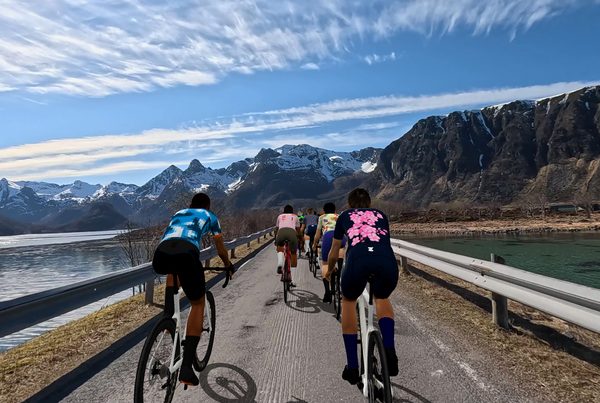
Zwift’s new real-world video routes are stunning. But how do you take real-world cycling footage and make it behave like Zwift? I spoke to Sean Parry, Strategic Director, and Jonny Noblett, Senior Manager Content Designer at Zwift, who were part of the core team behind its latest innovation, Zwift Video. What I discovered was a fascinating combination of engineering, ingenuity and some rather unusual equipment, including weather-scraping tools, shadow calculators and fan-cooled GoPros.
After riding every Zwift route more times than I care to remember, last year I turned to ROUVY for some variety. Zwift’s video routes are the first thing in years to give me the same excitement I felt when I first got on Zwift. I spent my first ride trying to break them, looking for avatars clipping through hills or cars appearing out of nowhere. I couldn’t find a fault.
So, I asked the people who made them how it’s done. The answer involves a lot more than pointing a camera out of a car window.
From Hackathon to Headline Feature
Zwift Video started as one of a list of “slightly wacky ideas” at an internal hackathon. David Brickhill, an engineer with a background in video games and video, asked whether real-life footage could run inside the Zwift game engine.
“It wasn’t a big strategic bet,” says Sean. “It was, let’s have a play around and see what can happen.”
It grew into an R&D project, and Sean joined it around 18 months ago. He’s keen to stress that it began well before any talk of Zwift acquiring ROUVY. “Everything that’s been built has been built for the Zwift engine specifically.”
The aim of Zwift Video isn’t to create an endless library of roads. It’s to offer a curated set of routes that retains everything Zwifters care about, from achievements and progression to historical stats and other riders around them, with real scenery as the backdrop.
Selecting the Routes
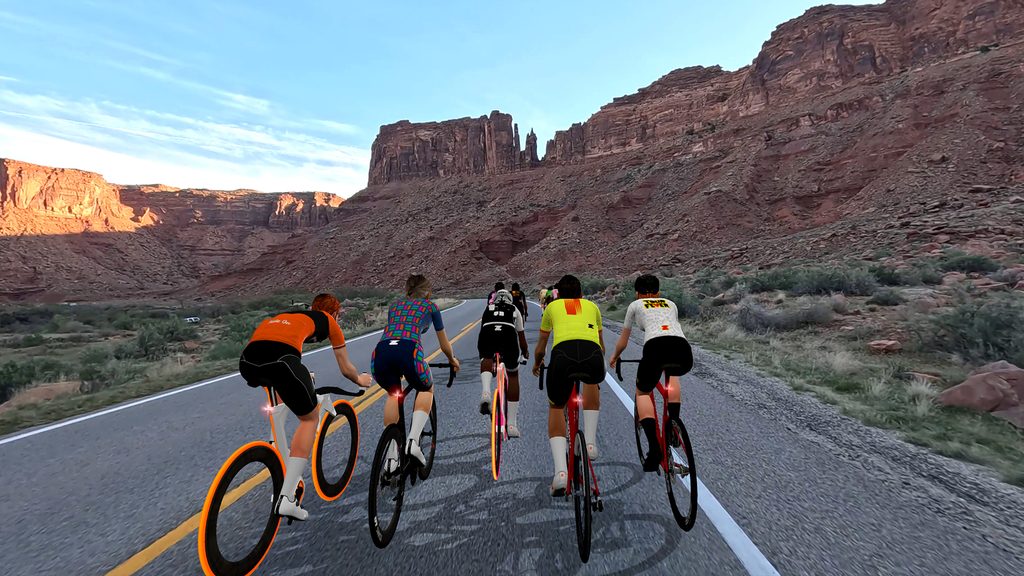
Zwift Video launched with 21 different routes from around the world. The routes have been chosen from three “buckets.” The first contains iconic roads from the Tour de France and other major races—the places people plan cycling holidays around. The second is spectacular tourist destinations, such as Utah, places you’d travel across the world to experience. The third is the element of surprise: places you’ve never heard of. For Sean, Norway’s Lofoten Islands sit firmly in that category. “It’s just the most insane place I’ve ever been.”
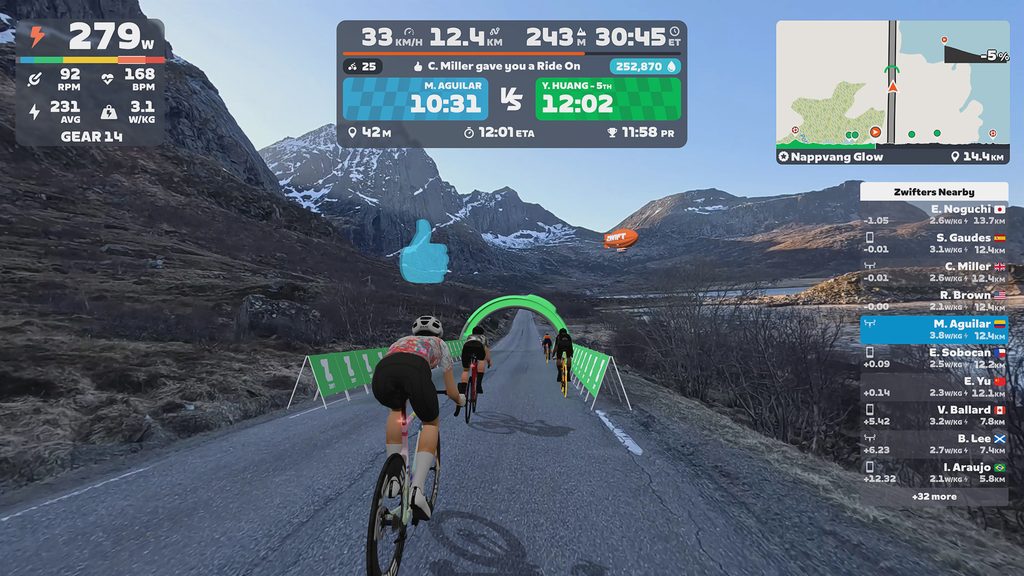
With a long list of iconic roads to choose from, Sean explained that every candidate goes through a strict filter: will it make a good indoor ride? “There’s plenty of outdoor rides that are stunning when you’re there,” Sean says. “On video you go, actually, there’s 20 minutes of repetitive tree cover there.” Long, straight roads are out too.
That’s why the Col de la Bonette, with its sweeping views and road visibly snaking above you, shot to the top of the list. The Col du Télégraphe, despite its fame, is mostly hidden under trees. “Whereas the Galibier is awesome,” Sean noted. “You might have five, six hours of footage. Out of that, we might get a 15 km chunk that we’re like, that’s it. That’s the bit.”
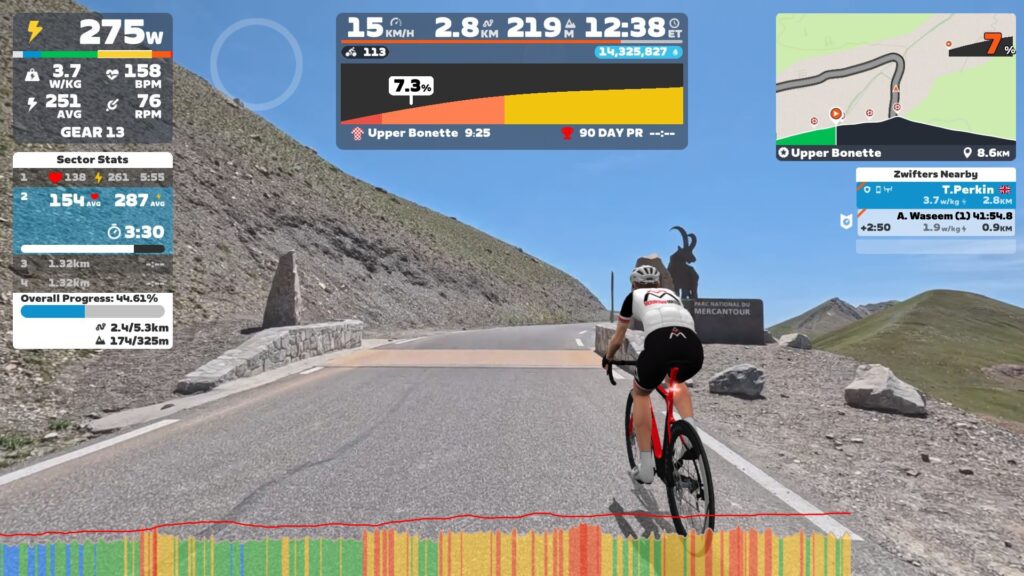
Shortlisted roads are then assessed for their riding potential. The team reviews the footage alongside GPS data, identifies the most engaging sections and tests the raw material long before a route makes it into Zwift.
It’s All in the Planning
An incredible amount of planning happens before filming begins. The project team built its own tools to pull in local weather data from around the world. The team travels only when a good weather window appears, which means trips are sometimes booked just three days in advance. Several filming destinations are kept ready, and the team sets off only when the forecast looks reliable. That explains why the Scottish route, Glen Etive, has perfect sunshine. It’s a road I know, having visited it several times—but always in the pouring rain.
The sun is another major factor. One of the team’s firm rules is that the camera car’s shadow must never appear ahead of you on the road. Because roads twist and turn in every direction, the team developed a tool that calculates where the camera car’s shadow will fall along a GPS route at different times of day. This gives each road its own “sun-safe” filming window. As Sean explained about Sa Calobra in Mallorca: “We couldn’t start filming that climb before 9:16 in the morning from the bottom, because any time before that we’d get shadow.”
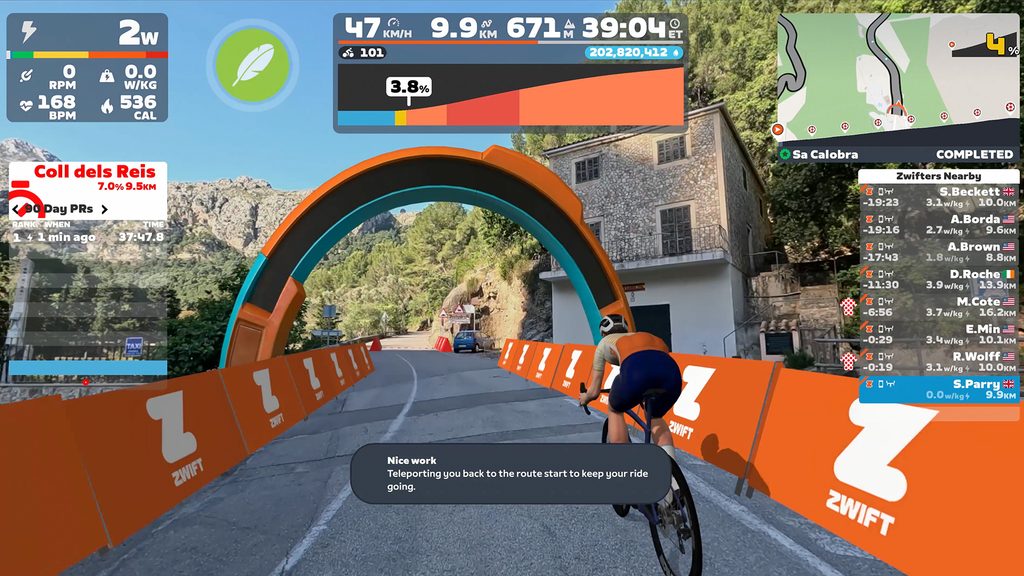
To maximise each filming trip, the team tries to capture multiple routes. These are ranked in a matrix and ticked off as the days go by. But there’s room for intuition, too. “Some of the best routes came from spotting a turning into a gorge that nobody’s ever spoken about publicly on the Internet and giving it a try,” Sean noted.
Two People, a Car and a Fan-Cooled GoPro
Each trip typically involves two people – a driver and a passenger/planner. Depending on the windows, Zwift may have multiple trips going on at once, or sometimes to maximise one specific location, send two teams to shoot. To achieve this, they utilize inhouse staff along with external support such as a video capture specialist. “The driving and the capture is actually literally the content,” Sean explains, so someone from the core team is almost always in the car.
The camera is a GoPro Hero 13, chosen because it’s widely available, shoots 4K at 120 frames per second and records GPS in the same file as the video. At those settings, though, GoPros overheat quickly. Jonny took one of the cameras apart to identify the heat sinks, then designed a 3D-printed mount with fans positioned to blow directly onto them. The cameras went from shutting down after about 20 minutes to recording all day. “We’ve done days where we’ve just filmed for like seven hours,” he says, “filling up a full half a terabyte memory card.”
The driving is a skill in itself. A tool sets the target speed for each gradient to match the range of watts per kilo riders produce on Zwift, while the passenger reads the live gradient from a Hammerhead and calls out “slow down” or “speed up.” Anything that disrupts a clean run means another attempt: slow cars, tight overtakes, animals, a bee on the lens, roadworks or tunnels. On Chapman’s Peak in South Africa, they simply drove the road end to end all day and kept the best take.
Making a Video Feel Like Zwift
Back home, every frame of every video is checked. The footage then goes through a bespoke tracking tool that turns the video into a 3D model, allowing avatars to be placed convincingly in the real world. Then comes the hand work.
Jonny curates “occlusion”, the process that makes virtual riders interact naturally with objects in the footage. As you crest a hill, your avatar disappears behind the terrain. When a van approaches, your rider passes behind it rather than appearing to ride straight through it. The team manually maps this for terrain, vehicles, signposts, lampposts and real cyclists.
As Sean explains “We use tools to set the baseline and hand place and curate the really detailed bits on top.”
Road feel is mapped, too: tarmac feels like tarmac on a smart trainer, gravel like gravel, and a cattle grid comes with its own rumble and sound effect.
Gradients were one of the biggest headaches. Every GPS device they tested gave different numbers, while trees and cliffs turn elevation profiles into noise. “Sa Calobra looked like it was like a sawtooth profile the whole way up,” says Sean. “There is no authoritative source of truth for any of these climbs.” The team built “self-healing” tools to smooth the data and anchor it to known reference points, so the gradient matches what you see.
Then there’s the detail you only notice when you ride. On the Upper Bonette descent, the game slows you into the hairpins using braking zones calculated from real physics. “It feels a bit more terrifying when it’s a real video and you’re going around the hairpin at 70k an hour,” Sean laughs. On hairpin climbs, the line is hand-picked and steering is locked, so your avatar never vanishes off screen.
The Little Details That Make Zwift, Zwift
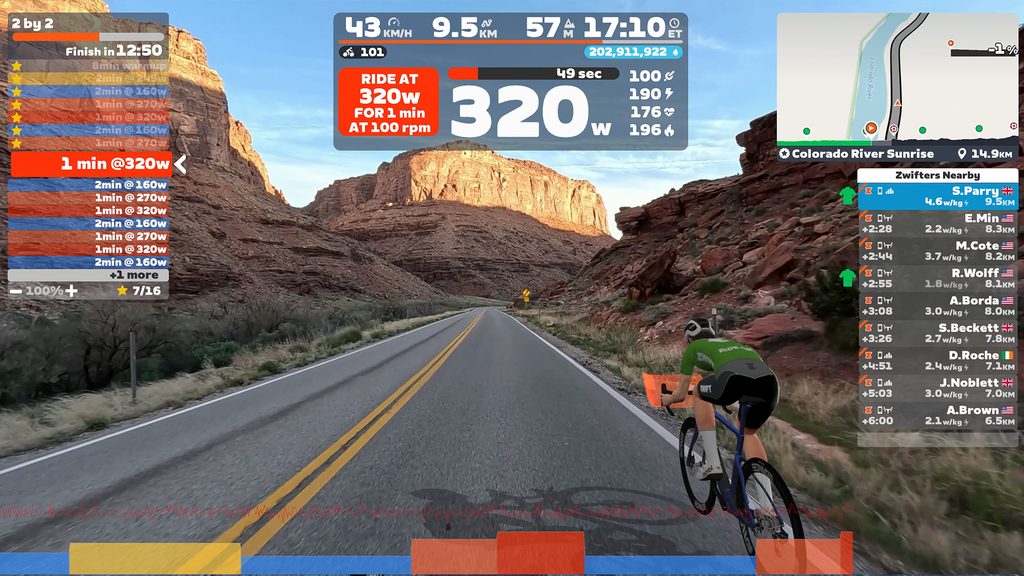
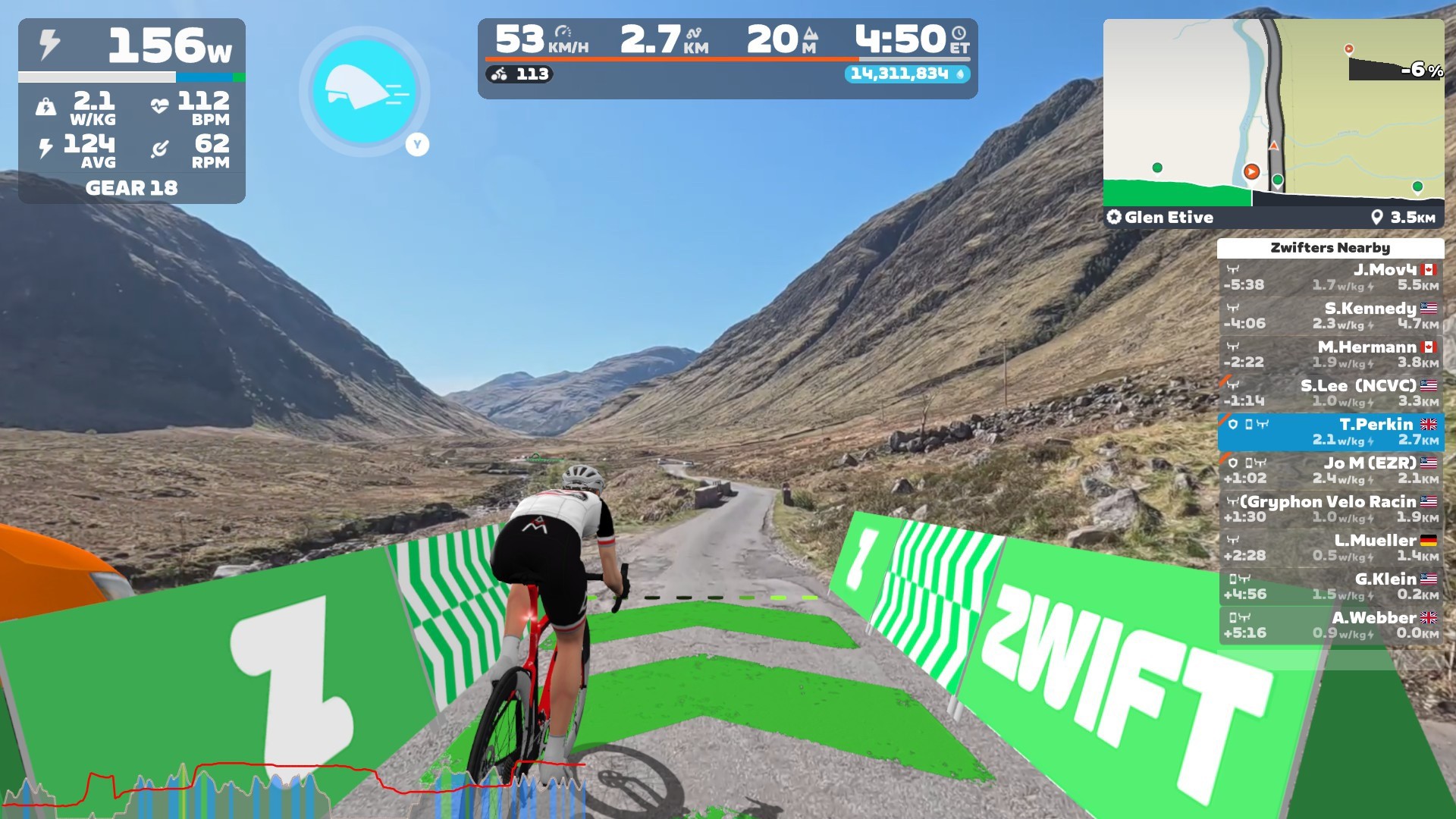
The Zwift touches are deliberately light. Jonny, who lives in Scotland, borrowed an idea from the road markings outside rural villages that count down to a speed-limit change. Three green or red chevrons on the road tell you you’re 300 metres from a sprint or climb segment, then two, then one.
Some of the props have a hidden job. Riders have commented on the vans parked behind the barriers on Colorado River Sunrise. They’re there to hide the real vehicles in the footage. Where a climb has no descent, as on Sa Calobra, a spinner wheel at the summit rewards you with XP and drops. Longer climbs are getting sectors, like those on the Climb Portal, so you can chase your personal records section by section.
Roads That Mean Something
The shortest route I rode, a 5 km stretch in Scotland, turned out to be the most personal. It’s Glen Etive, where Jonny spent every Easter white-water kayaking with his family as a child. Since it appeared in the James Bond film Skyfall, the road has filled with tourists, and their first attempt at filming it wasn’t clean. A capture specialist went back and got it. “I think it’ll be our Tempus Fugit of video,” Jonny says: short, compact and made to be ridden again and again.
The Verdict
I went into the conversation thinking video routes were simply a matter of filming a road, uploading the footage and tweaking a few things on a computer. I came out knowing that a climb might only be filmable between 9:16 and the moment the sun moves around, that a van might be hiding another van, and that someone has painstakingly positioned the exact point where your avatar disappears behind a hill.
It’s an extraordinary amount of work to make something look so effortless. And perhaps that’s the biggest compliment I can give the team: when you’re riding, you don’t think about any of it. You just enjoy the ride.
For the first time in a long while, I’m genuinely excited to get back on the trainer. And when I asked Sean what was coming next, he wouldn’t give anything away.
“I can promise you one other thing; we’ll have some more stuff coming that you’ll enjoy.”