Traditional headphones and outdoor exercise have never been an ideal combination. Cyclists and runners want to listen to music while exercising, but blocking your ears also blocks the sounds that help keep you safe. The Shokz OpenRun Pro 2 promises to solve that problem using open-ear technology—but does it actually deliver?
About Shokz
In 2024, Shokz, the global leader in open-ear headphones, launched the OpenRun Pro 2. These headphones are worn near your temples and transmit audio through the temporal bone (located on the side of your head) to your inner ear, instead of through your ear canal. This means you are able to listen to music without traditional earphones blocking your ears, allowing you to retain an excellent awareness of your surroundings, making them ideal for runners and cyclists who want to listen to music while training.
Shokz focuses on open-ear products for outdoor sports, including running and cycling. Their products are available in over 60 countries and have been recognized by the CES Innovation Awards, an annual competition honouring outstanding design and engineering in consumer technology products. Shokz has built its reputation around open-ear audio technology and now holds one of the industry’s largest portfolios of bone-conduction patents.
Their goal is to give users personal audio while helping them stay vigilant of their surroundings and be safe. They are the global pioneer in Open Ear technology and have developed Bone Conduction and DualPitch™ technologies.

About the OpenRun Pro 2 Headphones
The Shokz OpenRun Pro 2 is built for one purpose: letting you enjoy personal audio while staying mindful of your environment. For runners, cyclists, and anyone training outdoors, that combination has always been hard to find—traditional earbuds block your ears, reduce situational awareness, and often feel impractical with helmets, glasses, or long sessions. The OpenRun Pro 2 solves all of that through Shokz’s open-ear approach and their two core technologies: Bone Conduction and DualPitch™.
Technology Explained
Bone Conduction:Rather than blocking your ears, bone-conduction technology uses small transducers to transmit sound through the temporal bone. This lets you listen to music while still hearing what’s going on around you, like traffic, voices, or other everyday sounds.
DualPitch™: DualPitch™ technology combines bone conduction and traditional air conduction in a single hybrid audio system. Air conduction—the same way most headphones and speakers work—uses a speaker to send sound waves through the air into your ears. In the DualPitch™ system, a dedicated dome-shaped speaker handles low-frequency sounds, producing deeper, richer bass. The bone-conduction driver focuses on higher frequencies, adding clarity and detail for a more balanced listening experience.
Design
When running and cycling outdoors, I have never listened to music. This is because there has never been a pair of earphones that I found suitable that would not impair my safety. In-ear headphones meant that my understanding of what was going on around me was compromised, or other solutions were too bulky and not practical.
The OpenRun Pro 2 has been designed to be minimalist, not impacting what you can hear around you, and still be streamlined and practical for running and cycling.
The design keeps your ears open, allowing you to hear traffic, conversations, and other environmental sounds while listening to music.
As they hook over your ears and have a neck band, they are secure and consequently don’t shift when undertaking vigorous exercises. They have been designed to sit behind your head at a level that does not impede you when wearing a bike helmet and fit comfortably with helmets and glasses. In addition, they don’t cause discomfort when used for extended periods of time.
Due to their design, it is worth noting that these earphones are not ideal for noisy environments and need to be used in the right context.
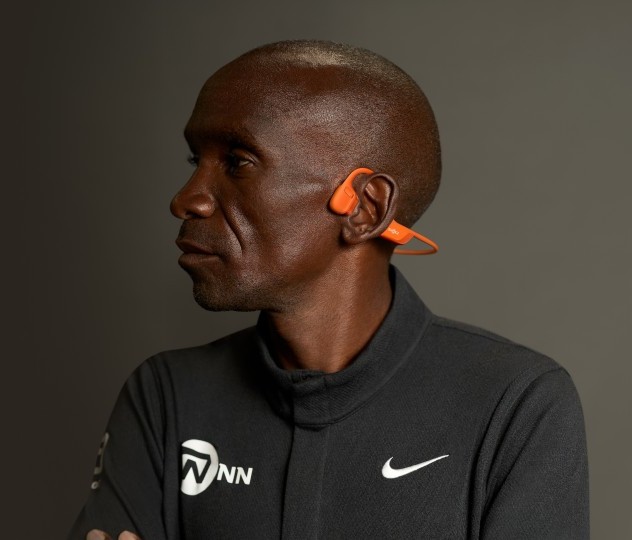

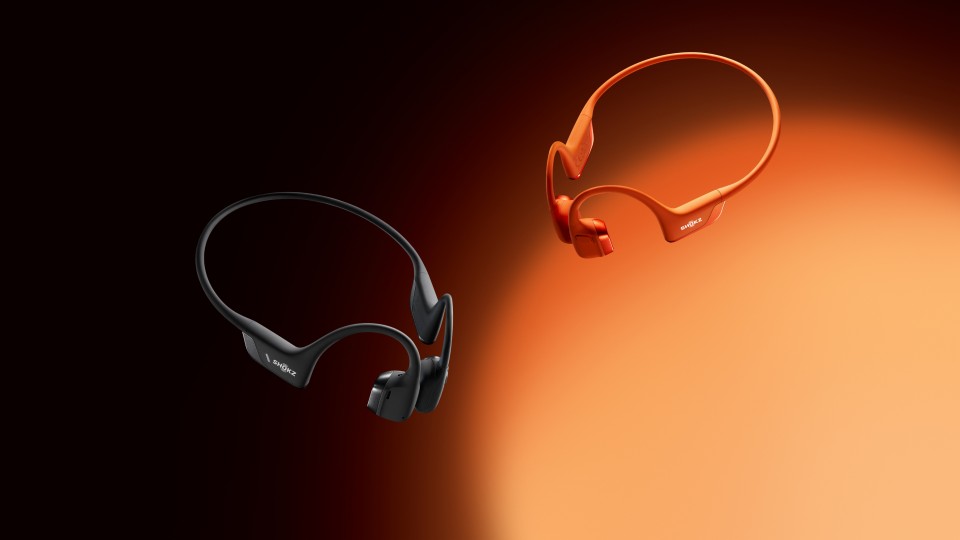
Headphones— The OpenRun Pro 2 is one of the lightest sports headphones I’ve used, at just 30.3 grams, and comes in two different sizes: regular and mini. The sizing is measured across the back of your head from one ear to the other. Regular is recommended for head measurements over 9.25 inches (23.5 cm), while the mini is advised for those with head measurements under 9.25 inches (23.5 cm).
They come in multiple different colours: black, silver, blue, and orange, and have a soft silicone coating making them water resistant.
A compact hard-shell carry case is included, making them easy to throw into a gym bag or cycling kit.
Buttons — There are only three physical buttons integrated into the headset: Volume +, Volume –, and the Multi-function Button. To turn on, simply hold the volume up button, and likewise, to turn off the headset, keep it pressed. The other button decreases the volume. The Multi-function Button is used to play, pause, and skip tracks.
The USB-C charging port is covered by a rubber plug that is easily removed and sits next to the volume control buttons.
Battery — The integrated Li-Polymer battery provides continuous play, which is up to 12 hours of listening time with a single charge, but naturally, the volume setting influences this. The longest I have used them is on a 3-hour bike ride. Charging is quick, taking only 60 minutes, and there is a “quick charge” option where a 5-minute charge gives 2.5 hours of battery life for music.
Shokz App
When you download the Shokz app and pair your headset, you unlock the full configuration menu—effectively the headset’s control center. From here, you can adjust settings, personalize controls, and choose from multiple sound modes based on your listening preference. The available EQ options include Standard, Vocal, Bass Boost, and Treble Boost, along with a fully customizable mode if you want to fine‑tune the audio.
In addition to those mentioned, there is also a Volume Boost, which is particularly useful for cyclists who want increased volume while riding.
The app also handles firmware updates, ensuring your headset stays current with the latest performance improvements and feature enhancements.
One of the most useful features is Multipoint Pairing. This allows the headset to connect to two devices simultaneously, eliminating the need to disconnect from one device before switching to another.
Costs and What You Get
Priced at £169.00 / $179.95 USD / $229.95 CAD, what you get for your money is as follows:
- OpenRun Pro 2 headphones
- Hardshell protective case
- USB type C charging cable
- 2-year warranty card
- Instruction manual
- Instructions on how to download the Shokz app
Although £169 initially feels like a steep investment, it sits alongside premium sports headphones from brands such as Bose, Sony, and Beats. Considering its unique open-ear design and excellent comfort, the pricing is fair when compared to competitor brands.
Sound Quality
When you turn on the Shokz OpenRun Pro 2 headphones, you are greeted with a startup tone and a voice prompt that provides the current battery level, making it easy to know how much listening time remains.
Evaluating sound quality is more subjective than reviewing features and functionality, but the OpenRun Pro 2 delivers a clear and enjoyable listening experience. The audio feels balanced and immersive, with impressive clarity even in environments with background noise. Whether you’re training in a gym with fans running or amidst the bustle of training noises, your music remains easy to hear and detailed. Compared with my previous experiences using traditional earbud-style headphones, the OpenRun Pro 2 provides a more comfortable and open listening experience without sacrificing sound quality.
Shokz notes that they have a “larger low-frequency speaker for a more booming, deep bass,” but I would say that it doesn’t match premium in-ear headphones.
How Do They Feel?
During testing, I used the OpenRun Pro 2 on several road rides, indoor trainer sessions, and runs up to 10km.
Wearing the Shokz OpenRun 2 for indoor cycling is a comfortable experience. The lightweight design means they don’t feel intrusive or distracting during a ride, and there is little noticeable difference compared with wearing a helmet outdoors. The secure fit keeps them in place, allowing them to be worn comfortably for extended training sessions without pressure or discomfort.
As expected, some sweat can build up around the ears during harder efforts, but the open-ear design avoids the damp, enclosed feeling that can happen with traditional earbuds. The headphones are easy to wipe clean and maintain after a workout. Unlike earbud-style headphones, there is no frustration of them loosening during intense intervals or having to stop mid-session to retrieve one that has fallen out.
For those who want to use the OpenRun 2 beyond cycling or exercise, they are equally suited to everyday listening. Their comfortable, lightweight design makes them a practical option for training, commuting, or general use while still allowing you to remain aware of your surroundings.

Do They Work?
After several runs and multiple rides, including long climbs and fast descents, I came away genuinely impressed. When cycling at high speed on a descent, the wind noise did distort the sound slightly, but only a small amount. Importantly, while cycling and running, the headphones stayed in place, and I didn’t lose any situational awareness. Overall, the audio was clear and crisp.
My one bit of advice would be to ensure you measure your head size and select the one that fits your measurements to ensure the best fit.
Summing Up
The Shokz OpenRun Pro 2 solves a problem that I have always had with headphones and outdoor exercise—how to listen to music whilst maintaining a level of safety.
For cycling and running, the open-ear design is the biggest advantage. You can enjoy music while still hearing what is happening around you, which is something traditional earbuds cannot provide.
They are lightweight, comfortable, secure, and practical, particularly when used alongside cycling equipment such as helmets and glasses. The sound quality is impressive for an open-ear design, and the battery life is more than enough for long training sessions.
Compared with traditional earbuds, the OpenRun Pro 2 sacrifices a little bass but gains enormously in comfort and safety. They may not replace traditional headphones for someone looking for maximum bass or complete isolation, but for cyclists, runners, and anyone who wants personal audio while staying connected to their surroundings, the OpenRun Pro 2 offers a very effective solution.
For more information, visit their website https://ca.shokz.com/pages/openrunpro2