The Jasper Gran Fondo is one of the most inclusive events I have been involved in with three different distances to ride depending on your appetite, and it was one of the most enjoyable days I have spent on the bike in recent times. All the ingredients were present, making the experience thoroughly memorable.
The route was spectacular, hosted on quiet, well-paved and fast roads, that weaved their way through the majestic Jasper National Park that included a large alpine climb as well as multiple shorter ones that required constant effort. This really was a tasty challenge. Throw in changing weather conditions for an extra bit of spice, this is a race to experience once in your lifetime.
With all these components and numbers only limited to 400 due to the event taking place in a national park, there were more than enough people to ensure a competitive field, but not too many to feel like the roads were crowded. Unlike other larger events with thousands of riders, you never felt unsafe, and the consequence was you could really enjoy the ride. For those that have raced on Zwift, it was a real-life version and incredibly fun.
Here is my story of the Jasper Gran Fondo.
The false start
There were three distances on offer, the 165km Gran Fondo, the 100km middle distance called the Medio and a short 65km ride called the Piccolo. There was also an E-bike category for those participating with E-bikes.
The Gran Fondo and Medio distance would use the same course, with the Gran Fondo going a further 30 kilometres down the famous Icefields Parkway than the Medio route, before turning around.
Consequently, they set off 15 minutes ahead of those tackling the 100km distance.
We had arrived early for the event, which was starting in the centre of Jasper townsite and is located in the heart of the Canadian Rockies. In my warm-up, I oiled the chain and went through the gears to test if everything was working. At the start, I positioned myself at the front to ensure I kept pace with the leading group.
Not being in optimal form, the plan was simple. Sit on the wheels of rides at the beginning of the race, then, when we hit the first climb, which was only a few kilometres from the start, get in a group and work together until the summit before descending, hoping that a group could be formed and catch those faster climbers on the valley floor.
Great plan in theory. Sadly, it didn’t survive the first few pedal strokes.
As the horn sounded the start, the group surged, and I clicked the right derailleur to shift into a hard gear, to keep pace. Nothing happened. The familiar click and snap as the gear popped into the sprocket didn’t happen. I flicked the left derailleur, nothing happened there either.
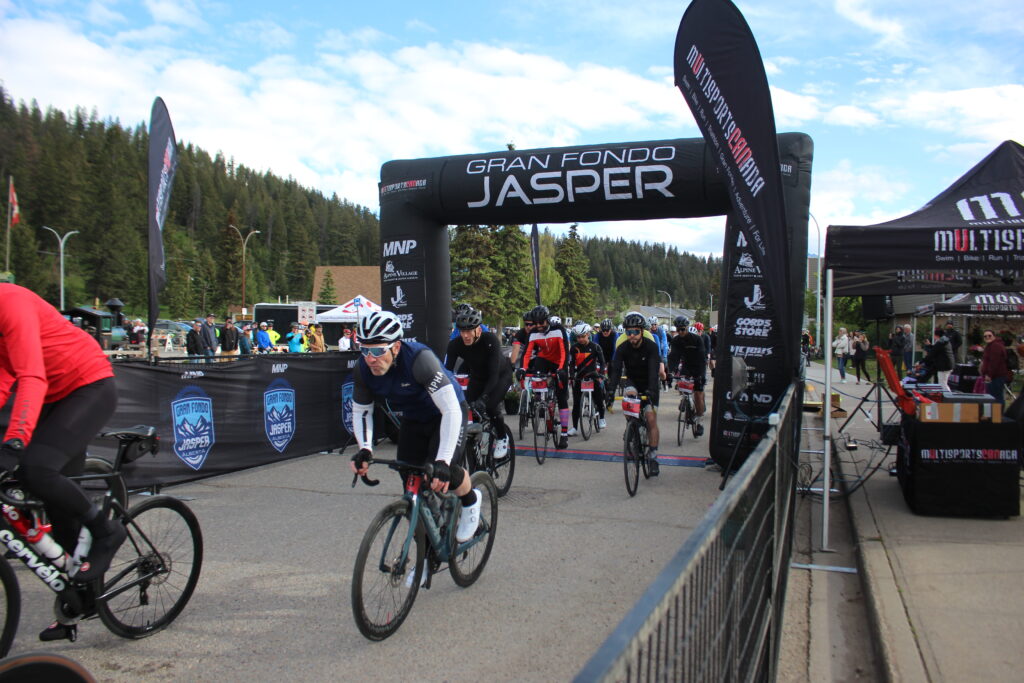
I pulled to the side of the road, a bit perplexed with what was going on, I was soon off the bike, yanking at the chain on the rear derailleur. If I was a pro, at this stage I would have simply got another bike from the team car and carried on my way. But I am not a pro and there was no team car. The only help I had was my wife and friend back at the start, so I turned around and cycled back. Both were surprised to see me.
We got the rear gears working and also thought we had fixed the front too, but as I headed off down the road in hot pursuit of the group, that was not to be the case. I realised I would be completing this ride using only the large front gear and, for those interested, it is a 50 chainring.
Mountain Massif time trial
Those that have raced the Mountain Massif events will know that for many years, the signature event was a 12.1km time trial up one of the virtual mountains on Zwift. Over the years, I have had a few false starts where the smart trainer drops the connection at the start, or there are some technical issues such as Wi-Fi connectivity. Those that have raced on Zwift will be familiar with these. I was now in the same position, so not unfamiliar territory.
I was in last place. I knew I would pay for this later in the race, but with nothing to lose, I blasted off to try and catch my competitors. I was in my very own Mountain Massif time trial.
In full-time trial mode, the aim now was to see how far up the field I could come, something I have done before, whilst racing on Zwift.
Marshalls were on hand to stop traffic and I sped through Jasper; I soon caught the first few people. I did feel sorry for them as two riders sat changing a punctured tire. I did feel guilty for not helping, but I was now on a mission to catch the group ahead.
Pushing 320 watts, the first few kilometres were a blur, and so I caught and passed the first group of riders, before the start of the Marmot Basin climb.
Marmot Basin climb
For several months, I have been hosting the Marmot Basin climb virtually on TrainingPeaks Virtual, to help people train for the event. My personal best was 35 minutes, but having expelled a lot of energy to get back in the race and with no climbing gear, I knew this was going to be a grind. But undeterred, off I went in hot pursuit of the leaders.
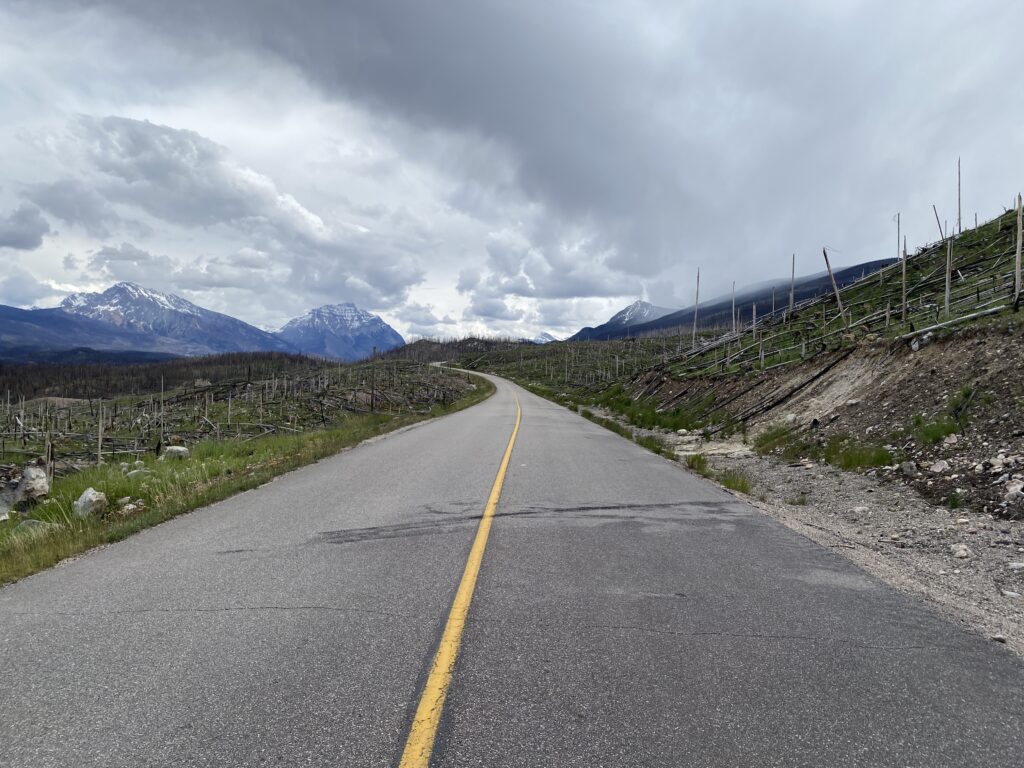
The climb can be categorised into three sections. The first part of the main road is steep, the second section from a fork in the road is less so and then the third and final section, the final kilometre to the ski station, reaches a pitch of 11%.
I pushed the first section, overtaking groups that had formed. When the pitch increased, I had to get out of the saddle and climb standing. For me, this isn’t my preferred approach but was the only way to keep momentum. When the gradient lessened, I could sit back in the saddle.
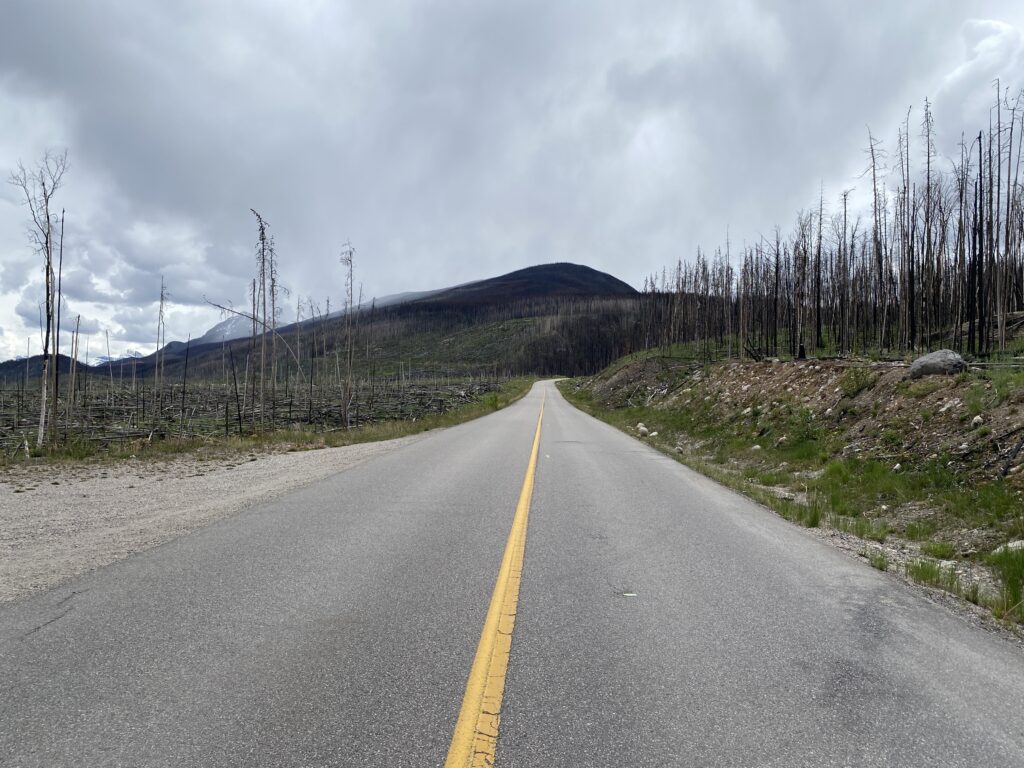
Despite this all-out effort, I was cognisant about looking at the breathtaking views over the valley. I was able to do so because in summer 2024 Jasper was ravaged by the largest forest fire in its recorded history. The result was that the pine forests that marked the landscape had disappeared, allowing a clear view for miles.
It was towards the end of the second section of the climb that I saw the leaders of the race. I tried to count them to calculate my position, but I soon lost track and focused on what I was doing. At this stage, I could feel the adrenalin wearing off.
The last kilometre and in particular the last 500 meters were torture. As the gradient hit double figures on my computer, my pace slowed. I desperately needed those extra gears. The thought of stopping and physically putting the chain on the smaller front chainring crossed my mind, but having come this far, I felt compelled to continue, and I started weaving across the road, my front thighs burning.
The descent
My achievement was that on the climb, I had not been passed by anyone on the ascent. Relieved, I reached the top and zipped up my main jersey, but in my haste, was on the descent before I could zip my jacket. On the descent, I tried to make myself as aerodynamic as possible and as the road levelled, I stopped to zip up the jersey before continuing the descent. I pushed the gears to get that extra bit of speed, and was trying to descend as fast as possible, but like on Zwift, I got overtaken and, despite my best efforts at pedalling and being in the super tuck position, I watched as the distance grew.
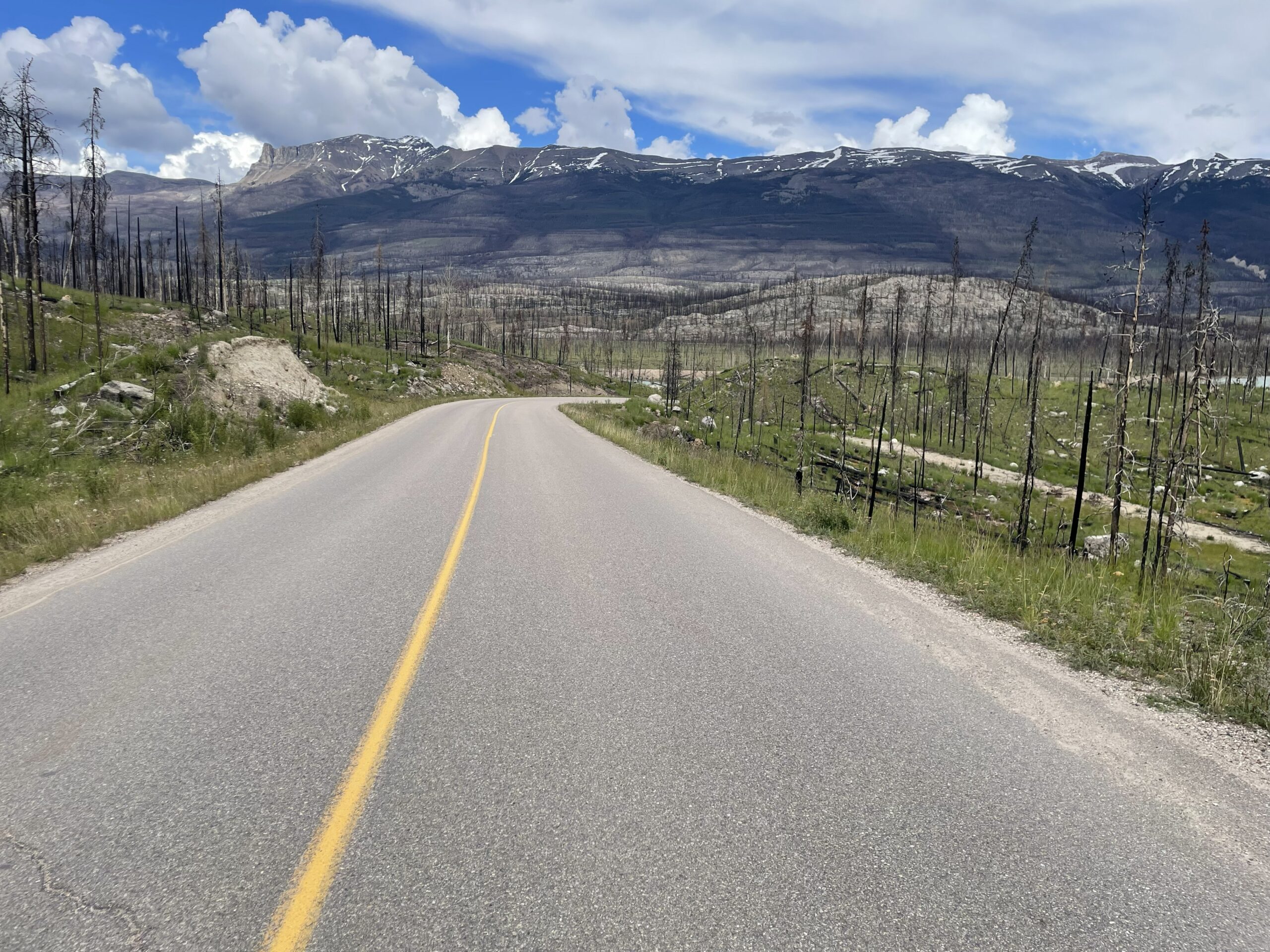
The wide road allowed you to carry good speed into the corners and descending was fun, far more fun than descending the narrow, twisty roads in the French alps, where any error in breaking could see you end up at the bottom of a ravine.
The valley floor
Having descended into the valley, I tried to catch the rider that had overtaken me on the descent. With the adrenaline from the first hour of frantic activity, it became clear that I was making only minor gains. And on looking over my shoulder, I could see a rider fast approaching on these open and scenic roads.
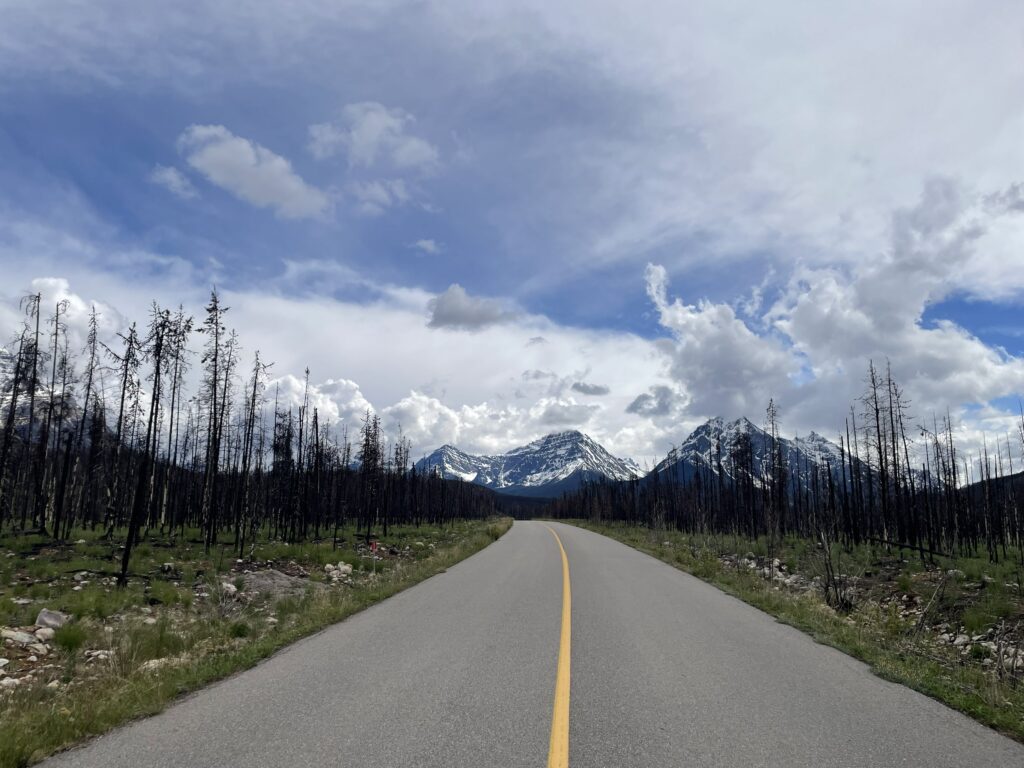
I kept a steady tempo and when they pulled alongside me, we chatted and agreed to ride together to catch the rider ahead.
My new friend was Kar-Wing. And like a car, he had a terrific engine and sat on his wheel to regain a bit of energy. And soon we were reeling in the ride ahead, passing majestic lakes as we went.
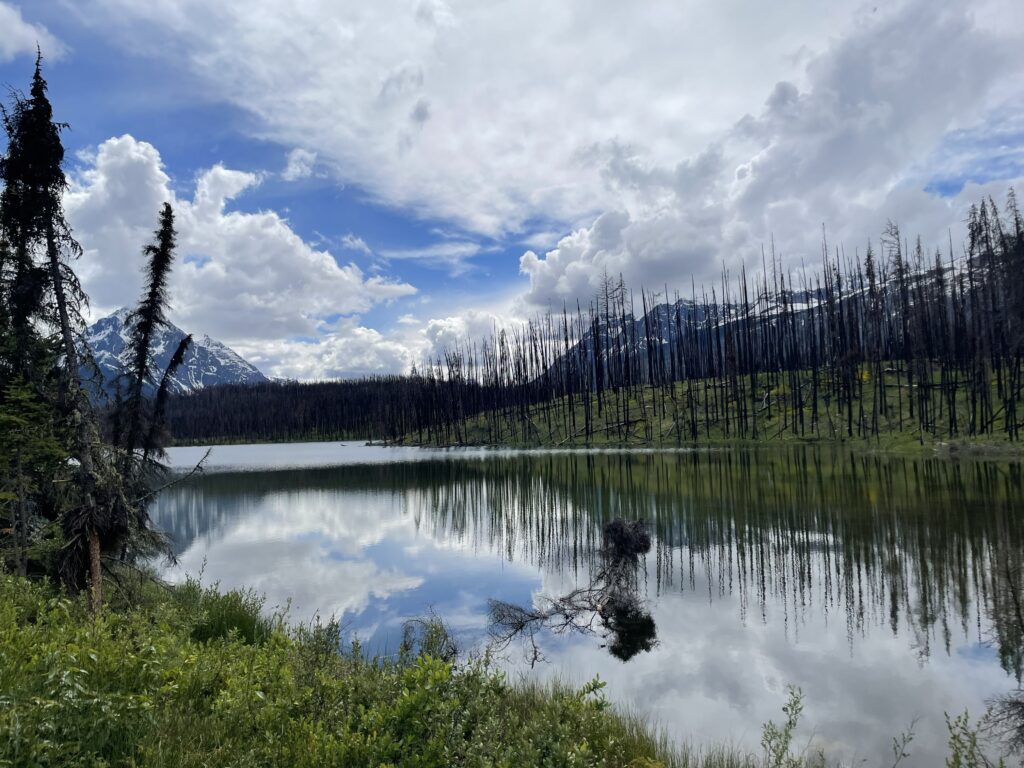
Before the end of this section of road, we could catch the rider, who was called David, and we rode together before reaching a significant landmark, Athabasca falls.
It was here that our group got caught by another rider, who was literally a machine. On the flat the power he could put out dropped our group. And with Kar-Wing needing a pit-stop, the group was down to two, and we made it to the turnaround point and started heading back, with now 70 km completed.
Kar-Wing at this point had rejoined the group, and we were yo-yoing as a group. On the ascents, we caught the power rider, but lost him on the flat.
Getting dropped
With 80 km left we hit another hill. With no small gear to change into, I could not turn the pedals over fast enough to keep pace with the group and, like that, I was gone.
I could do nothing and watched like a train; they pulled away.
The ride to the finish
Survival mode kicked in. With 20 km left, I looked behind and couldn’t see any riders. So, I picked a tempo I could sustain, which was a little under 30kph, and I just kept it steady, spinning over the legs the best I could.
On the small hills, I noticed that as I got out of the saddle, my lower back was causing me pain, but this was soon offset as I hit some bad weather, first in the form of rain and then this turned into hail.
I was literally being pummelled by hail. It was fierce and stinging my face. Coupled with the cold, my right thigh started to cramp and there was still 15 km left!
This was intense, so I downed the last of my gels and started focusing on maintaining a steady speed, and I was soon out of the storm and the kilometers soon ticked off. I soon saw the sign for Jasper noting it was 6km away. I dug deep with the knowledge that there was probably only 12 minutes of effort remaining.
Familiar landmarks came into view and with the rain and hail stopping, I could enjoy the run to the finish.
I crossed the line in 18th place overall, thoroughly delighted.
The after party
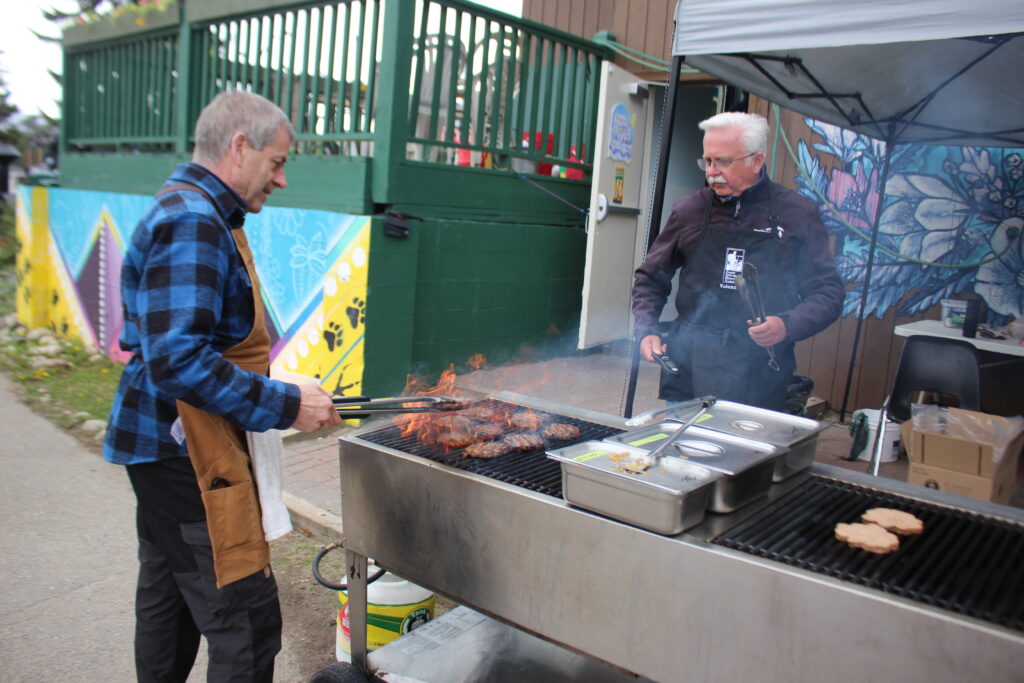
At the finish, a barbecue was laid on where all finishers were treated to their medal refreshments, and it provided riders with the opportunity to catch-up and swap race stories. It was here that I got a chance to speak with Kar-Wing who filled me in with what happened after I was dropped from our group towards the end.
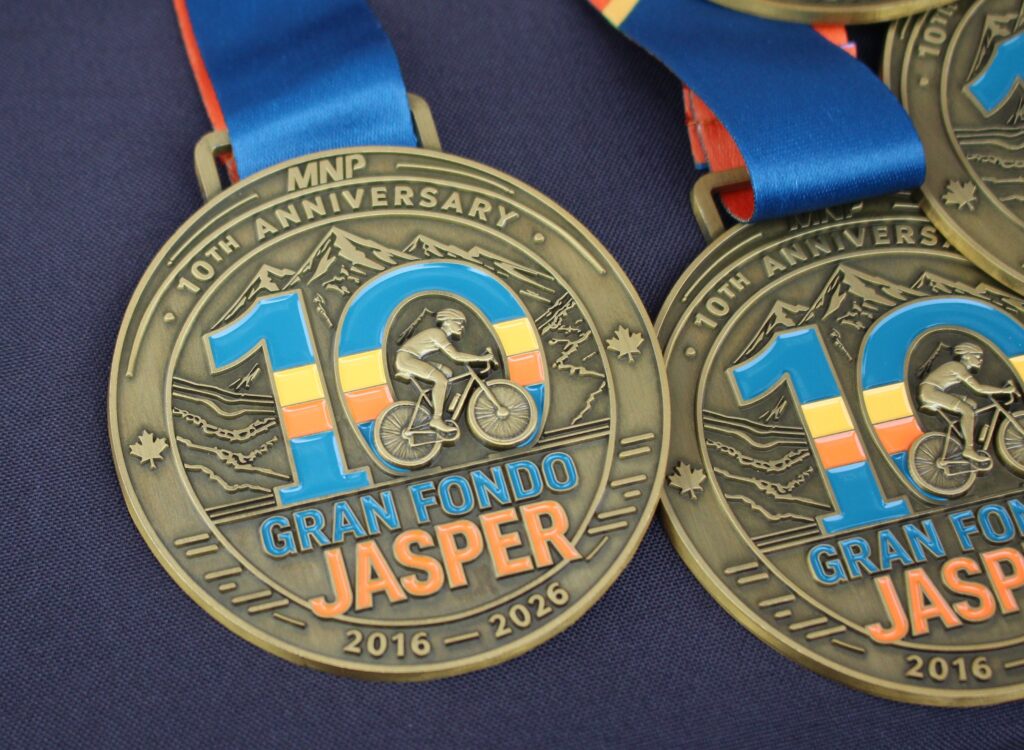
Summing up
The winner of my race was 16-year-old Watt Mitchell, who put in a stunning ride to finish in under three hours, in a time of 2:53:53. He also was first up the Marmot Basin climb in a time of 33:20, claiming the “King of the Mountain” crown whilst Amber Burgess was the “Queen on the Mountain” with her time of 38:43. My climb time of 42:41 was respectable given I competed the task on the large chainring, which wasn’t optimal.
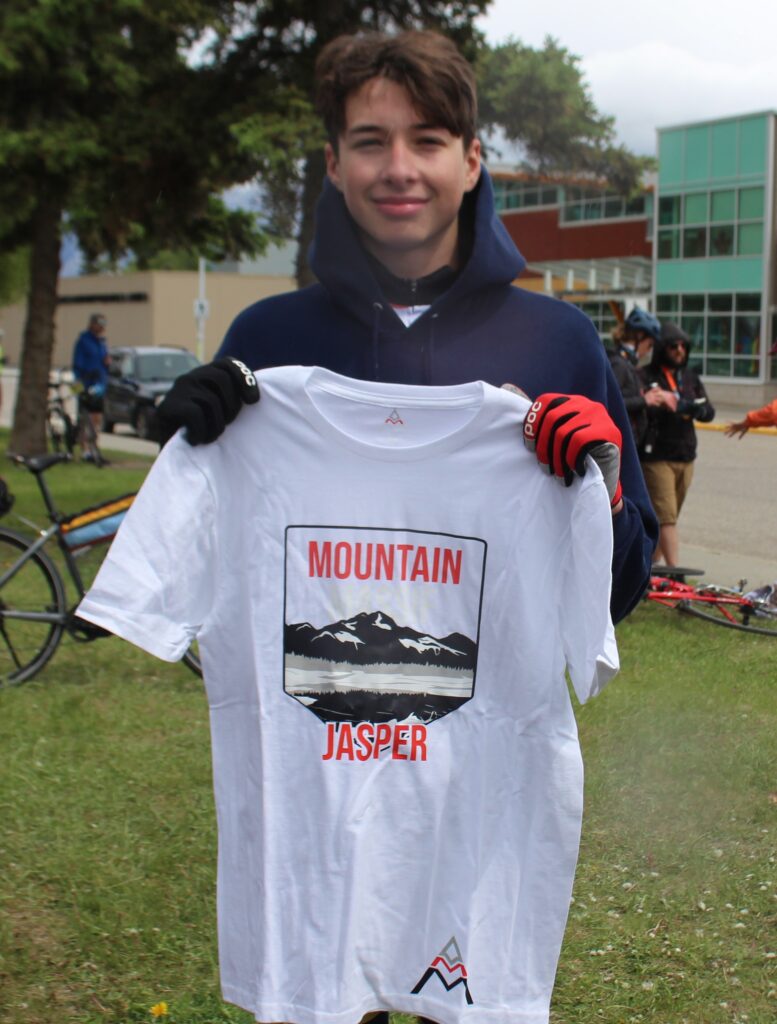
Participants in the Gran Fondo were equally rapid, with the winner, Frank Lucarelli, finishing the 165km route in 4:45:04. I caught up with Andrew Storey who completed the 165km course, finishing in 9th position and noted that he was “worried about the climb at the start, but really enjoyed it and had a lot of fun on the descent and will be back next year to better my time.”
The winner of the Piccolo race was Carley Hounjet, who completed the route in 2:03:06, with an average speed of 31.7 kph, on undulating roads.
Lisa Christensen finished first in the E-bike 65km category in a time of 2:47:43.
My takeaway was that Jasper Gran Fondo offers a really memorable cycling experience. It was a well-organized and safe event that combined breathtaking scenery with a challenging course that fosters genuine camaraderie among participants. Despite personal setbacks, I had real fun, in part due to the event’s spirit and the stunning backdrop of Jasper National Park makes it a must-ride for any cycling enthusiast.
Like Andrew, I’ll be back next year, for sure.